
The Wardrobe Wellness Edit

How to Dress with Confidence on Ozempic
I have a friend who’s been on her weight loss journey. She tried exercise first, and now she’s using medication. Every few weeks, I get a text with a photo: her celebrating another milestone, another size down. The joy is real, and I celebrate with her every single time. But then comes the other text, usually a few days later: “I went shopping today and I don’t know what to buy. There are all these stores I can shop at now, but nothing feels like me.”
I hear this from so many women. You finally have access to everything you thought you wanted, but you still don’t know what to reach for. Why? Because weight loss solves the size problem, but it doesn’t solve the style problem.
This is what I want to talk about today. Not to tell you whether you should or shouldn’t pursue weight loss medication (that’s deeply personal, and your body, your choice, always), but to offer you something to try alongside that journey, or even before it. Something that might change not just how your clothes fit, but how you feel in them.
I call it Wardrobe Wellness. And I think of it as therapy you can wear.

Data source: CBS News survey on GLP-1 and clothing size changes.
The Weight Loss Paradox Nobody Talks About
Losing weight doesn’t automatically give you style clarity. It doesn’t erase the years of dressing to hide, to minimize, to disappear. It doesn’t teach you what colors make your heart sing or what silhouettes make you feel powerful. It doesn’t heal the relationship you have with your reflection.
What often happens instead is this: you lose the weight, you walk into your closet (or into stores), and you realize you have no idea who you’re dressing. You’ve spent so long dressing a body you wanted to change that you never learned to dress the person inside it.
You try on identities like you try on jeans. You reach for what should work, what the influencers wear, what looks good on the mannequin. But nothing feels right because you skipped a step. You transformed your body without transforming your relationship with yourself.
I’m not a psychologist or a doctor, but I’ve been digging into the research on rapid weight loss, and what I found validated everything I’ve been witnessing with the women I work with. When your body changes faster than your sense of self can adapt, it creates what researchers are calling “identity disorientation.” Women describe looking in the mirror and not recognizing themselves, not with joy, but with genuine confusion. One woman put it perfectly: “I thought I’d just feel better, but instead I feel off balance.”
The physical transformation happens in months. The psychological integration? That can take much longer. And what’s often missing from the weight loss conversation is support for helping your identity catch up with your body.
That’s exactly where Wardrobe Wellness comes in.
What Is Wardrobe Wellness?
Wardrobe Wellness is the practice of getting clear on who you are, what you love, and how you want to move through the world before your body changes. It’s about building a foundation of self-acceptance that will hold you steady through any transition.
It’s not about learning to love your body “as is” so you never change it. It’s about learning to know yourself “as is” so that when you do change, whether through weight loss medication, lifestyle shifts, or simply time, you’re not starting from scratch.
Think of it this way: if you’re going to renovate your home, you don’t throw out all your belongings and start over. You figure out what you love, what serves you, what makes you feel like you. Then you build around that foundation. Your body is your home. Your style is how you decorate it. And you deserve to know what brings you joy before you start remodeling.
The Four Pillars of Wardrobe Wellness
1. The Closet Edit: Release the Energy Suckers
Your closet right now is probably holding onto more than clothes. It’s holding onto guilt (the dress you never wore), aspiration (the jeans from three sizes ago), and identity confusion (clothes that represent who you thought you should be).
These are energy suckers. And they’re keeping you stuck.
Your first wellness step: Go through your closet and identify the pieces that drain you. The ones that make you feel shame when you see them. The ones you’re keeping “just in case.” The ones that represent a version of yourself you’re trying to force into existence.
Remove them. Donate them, sell them, or simply put them in a box out of sight. This isn’t about having a perfect closet; it’s about creating space to breathe and feel well.
2. Style Discovery: Ask Yourself Better Questions
Most of us have never been asked: What do you actually like to wear?
We’ve been asked which styles flatter our body type. What’s age-appropriate. What’s professional. What hides our “problem areas.” But not what makes us feel alive.
Your style discovery prompts:
- What’s one piece in your closet right now that you reach for on hard days? What does it give you?
- If you could only wear three colors for the rest of your life, what would they be? (Don’t overthink this, go with your gut)
- What silhouette makes you feel most like yourself? Fitted? Flowing? Structured? Soft?
- How do you want to feel when you get dressed? Powerful? Comfortable? Creative? Elegant? All of the above?
- Think about a day when you felt completely yourself. What were you wearing? What made that outfit work for you?
Write these answers down. This is your style foundation, and it has nothing to do with your size.
3. Body Acceptance Practices: The Foundation of Everything
Body acceptance doesn’t mean you can’t want change. It means you refuse to put your life, your style, your confidence, your self-expression, or your pursuit of success on hold until the change happens.
A wellness practice to try: Every morning for the next week, before you get dressed, stand in front of the mirror and say one thing your body does for you. Not how it looks; what it does. “My legs carried me through the day yesterday.” “My arms held someone I love.” “My body is healing itself right now.”
This practice builds a deep relationship and connection between you and your body. Through my work as a wardrobe wellness coach and personal stylist, I’ve learnt that you can’t dress someone you don’t know. And you can’t know your body if you’re only looking at it through the lens of what you want it to become.
4. Create Your Personal Wardrobe Plan
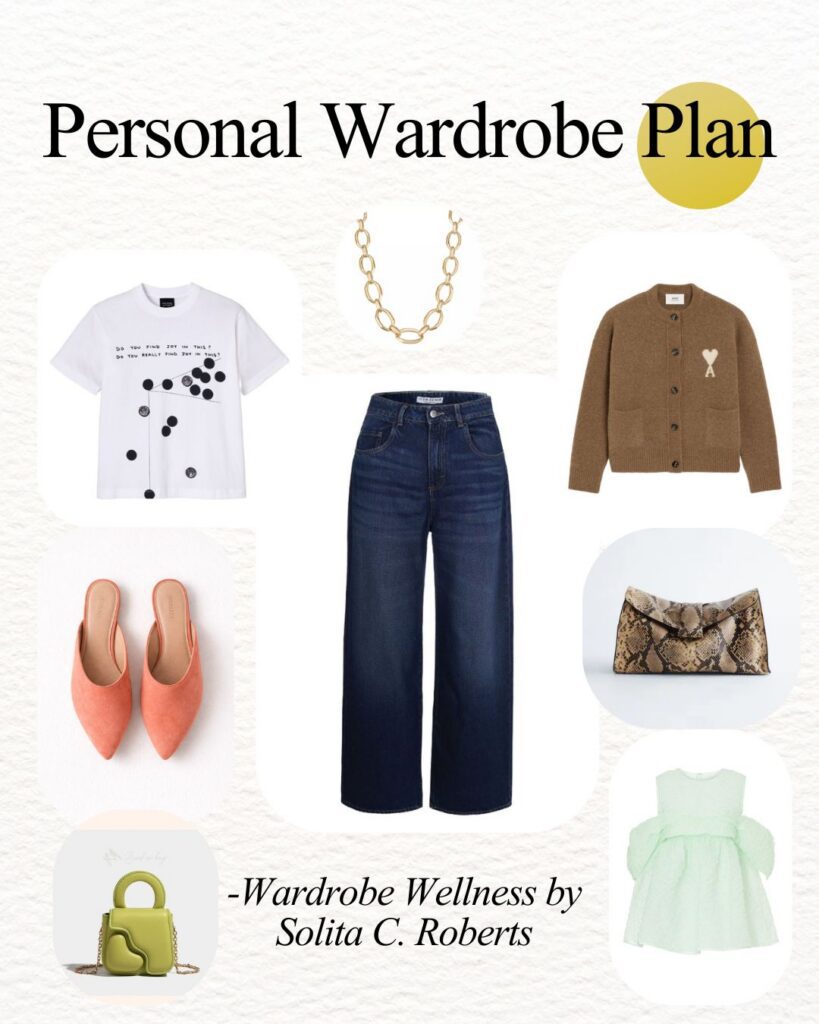
Whether you’re in the middle of weight loss or simply tired of feeling lost in your closet, you need a plan that works now, not later. Your wardrobe should support who you are today, not wait for who you think you’ll become tomorrow. When you have a clear plan rooted in self-knowledge, getting dressed becomes easier at every stage.
Your Wardrobe Wellness Plan:
Right now, at this size:
- Identify 5-7 pieces you already own that make you feel good. These are your anchors.
- Build capsule outfits around them using the style discoveries you wrote down (your colors, your silhouettes, your feelings).
- If there are gaps, fill them intentionally but only with pieces that reflect your answers, not someone else’s style rules.
During transition (if you’re losing weight):
- Invest in a few key transitional pieces in your core colors and silhouettes. Think: a great pair of jeans that can be tailored, wrap dresses, and adjustable waist pieces.
- Don’t wait until you’re “done” to dress well. Every version of you deserves to feel expressed.
- As pieces get too big, let them go with gratitude. They served you. They don’t need to come with you.
After weight loss:
- Go back to your style foundation. Your size changed, but did your colors? Your preferred silhouettes? Probably not.
- Shop from that foundation, not from aspiration or external validation.
- Remember: the goal isn’t to finally start dressing well. It’s to continue expressing who you’ve been all along.
Your Next Steps
The pillars are clear. But none of this matters unless you actually start.
This week, I want you to try just one thing:
- Pick one pillar from above (the closet edit, style discovery, body acceptance, or your wardrobe plan)
- Spend 20 minutes on it. Not hours, not a full closet overhaul, just 20 intentional minutes.
- Notice how you feel afterward. Not how your closet looks, but how you feel.
Welcome to Wardrobe Wellness. Welcome home to yourself.
What pillar are you starting with? I’d love to hear what resonates with you.


https://shorturl.fm/6dB0e